What "Anti-Inflammatory Eating" Actually Means (No Elimination Diet Required)
"Anti-inflammatory" gets stamped on everything from smoothies to skincare. Here's what a real 2025 meta-analysis of 18 clinical trials found, what it means for your plate, and why nothing here requires cutting out a single food group.
By Coach Nadira · Food & Inflammation · 9 min read
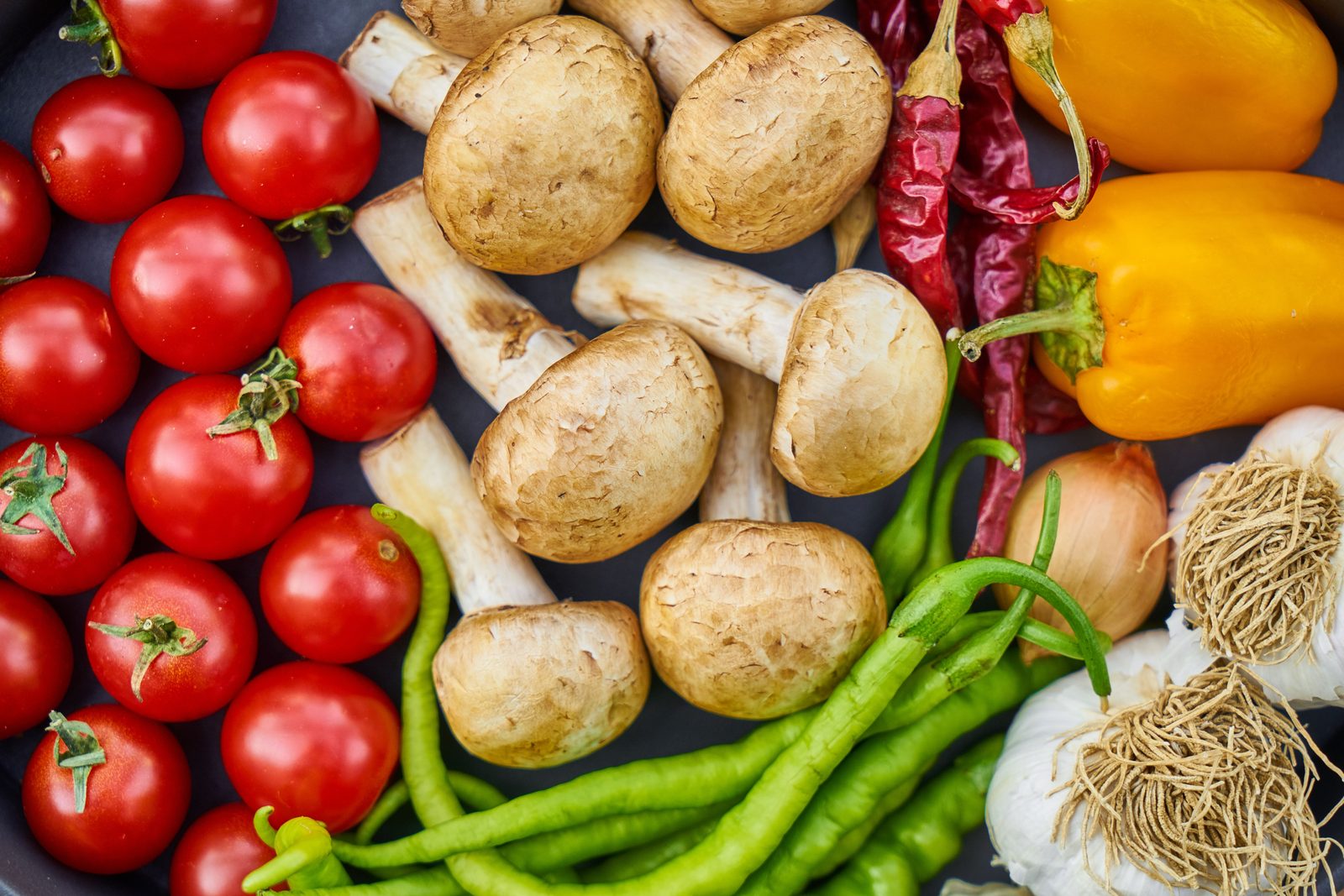
Photo by Engin Akyurt via Pexels
Scroll through any wellness feed for five minutes and you'll see it: "anti-inflammatory" turmeric lattes, "anti-inflammatory" skincare, "anti-inflammatory" everything. Somewhere in the noise, the actual research on food and inflammation got buried under a marketing buzzword. So let's dig it back out — what a real meta-analysis found, what it didn't, and what any of this has to do with your next grocery run.
What "inflammation" actually means here
Inflammation itself isn't the enemy — it's your body's normal response to injury or infection, and you'd be in real trouble without it. What food science is actually concerned with is chronic, low-grade inflammation: the kind that simmers in the background for years and is linked to heart disease, type 2 diabetes, and other long-term health issues. That's the inflammation diet research is trying to influence, not the short-term kind that shows up when you twist an ankle.
What the research actually says
A 2025 systematic review and meta-analysis in Frontiers in Nutrition pooled 18 randomized controlled trials — 2,602 participants total — comparing anti-inflammatory eating patterns to typical omnivorous diets. Here's what it found:
- Blood pressure dropped. Systolic blood pressure fell by an average of 3.99 mmHg, and diastolic by 1.81 mmHg — both statistically significant.
- Cholesterol improved. Total cholesterol and LDL ("bad") cholesterol both showed significant reductions.
- Inflammation itself ticked down, modestly. hs-CRP, a common blood marker for inflammation, showed a small but statistically significant reduction.
- Not everything moved. HDL ("good") cholesterol and triglycerides showed no significant change.
The honest bottom line
The effects are real but modest, and the researchers themselves flagged a limitation worth repeating: the hs-CRP result came from only five of the eighteen studies, so that particular finding deserves some caution. This isn't a miracle switch you flip — it's a pattern that nudges several cardiovascular and inflammatory markers in the right direction at once.
The foods that actually move the needle
Here's the part that should be a relief: Harvard Health puts it plainly — "many of the so-called anti-inflammatory diets are more hype than real science," and following one specific named program isn't a requirement. What matters is the overall pattern, not any single ingredient.
Lean toward: fruits and vegetables, whole grains, fatty fish, nuts and seeds, olive oil, low-fat dairy, poultry, and plant-based protein sources.
Eat less often: red meat, sweets and sugary drinks, highly processed foods, and high-sodium items. None of these need to disappear completely — the research is about pattern and proportion, not perfection.
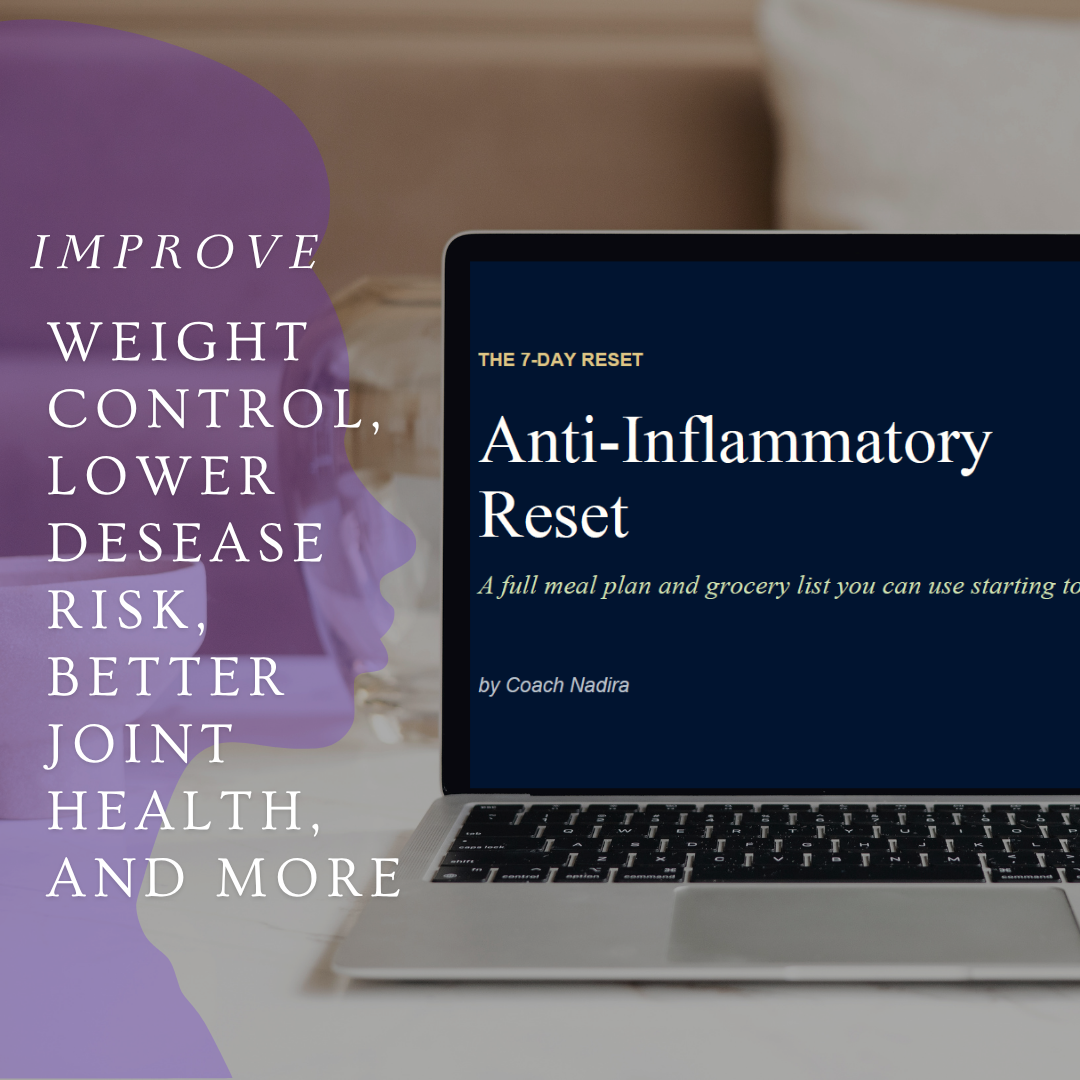
7-Day Anti-Inflammatory Reset — $27
A structured week of meals and small habits built around the food patterns above — no elimination required, nothing to overhaul overnight.
See the 7-Day ResetThree low-effort swaps to start today
- 1. Swap one processed snack for a handful of nuts or berries. Small, repeatable, no meal plan required.
- 2. Add fatty fish to your week twice, not never. Salmon, sardines, or mackerel once or twice a week is a well-supported swap, not an all-or-nothing rule.
- 3. Cook with olive oil more often than butter. A simple substitution that shows up consistently across every "anti-inflammatory" eating pattern studied, from Mediterranean to DASH.
"You don't need to eliminate a single food group to eat in a way that helps your body. You need a pattern you can actually keep up for longer than a week."
— Coach Nadira
Sources
- Frontiers in Nutrition (2025), "Impact of anti-inflammatory diets on cardiovascular disease risk factors: a systematic review and meta-analysis" — 18 RCTs, 2,602 participants, blood pressure/lipid/CRP results
- Harvard Health Publishing, "The best anti-inflammatory diets" — food lists and the "hype vs. science" framing
Frequently Asked Questions
Do I need to eliminate entire food groups to reduce inflammation?
What foods actually help lower inflammation?
What does the actual research show about anti-inflammatory eating?
Is the 7-Day Anti-Inflammatory Reset a medical treatment?
Ready for a plan, not a restriction?
$27 · a full 7 days of meals and habits · nothing to eliminate.
See the 7-Day Reset