Fermented Foods vs. Probiotic Supplements: What Actually Helps Your Gut
A Stanford trial put a fermented-food diet head-to-head with a high-fiber diet for ten weeks. Here's what actually moved the needle on gut bacteria and inflammation — and the honest truth about probiotic pills.
By Coach Nadira · Gut Health · 8 min read
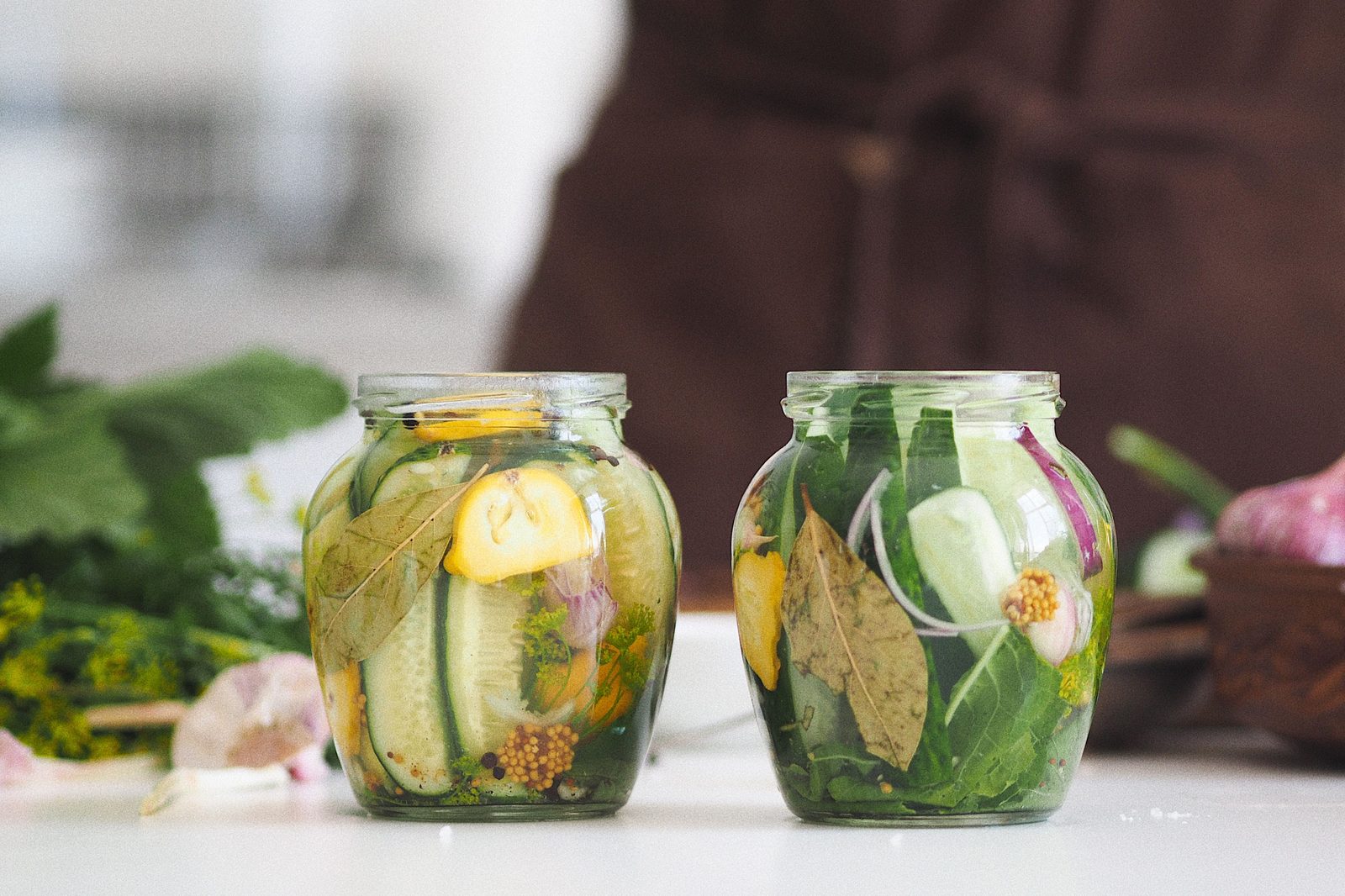
Photo by Maria Verkhoturtseva via Pexels
"Gut health" has become one of those phrases that gets slapped on everything from soda to skincare. Underneath the marketing, there's a real and interesting body of research on how the trillions of microbes in your digestive system connect to inflammation, mood, and immune function. Let's look at what a real clinical trial found — food, not pills — and be honest about where probiotic supplements actually stand.
What the "gut-brain axis" actually is
Your gut and brain are in constant two-way communication, largely through the vagus nerve, immune signaling, and molecules your gut bacteria produce. This is a real, well-documented system, not a wellness buzzword. What's less settled is exactly how much you can influence it, and how reliably, through diet or supplements — which is where a lot of marketing quietly gets ahead of the science.
What the research actually says: food vs. fiber
In a 2021 Stanford-led trial, 36 healthy adults were randomly assigned to one of two 10-week diets: one group increased their intake of fermented foods (things like yogurt, kefir, kimchi, and kombucha), the other increased high-fiber foods. Researchers tracked their gut microbiome and blood markers of inflammation throughout.
- The fermented-food group's gut bacteria became more diverse — and the effect was stronger in people who ate larger servings.
- Nineteen inflammatory proteins dropped in their blood, including interleukin-6, a marker tied to chronic stress and long-term disease risk.
- The high-fiber group didn't see the same shift. Their microbiome diversity stayed roughly stable, and researchers noted that "increased fiber intake alone over a short time period is insufficient to increase microbiota diversity."
The honest bottom line
This was one 36-person trial, not a settled scientific fact — and fiber still matters for plenty of other reasons. But it's a genuinely useful data point: in this study, actual fermented foods outperformed a high-fiber diet alone at shifting the gut microbiome and lowering inflammatory markers over ten weeks.
What about probiotic supplements?
This is the part most bottles don't tell you. Reviews of gut-brain axis research describe probiotic and prebiotic supplementation as a "promising" but early area — effects tend to be specific to the exact bacterial strain, dose, and health outcome studied, and a lot of commercial products haven't been tested in the precise form they're sold in. A supplement that helped in one clinical trial with one strain doesn't automatically mean a different product on a shelf will do the same thing for you.
None of that means supplements are useless — it means the food-first approach has a more direct evidence trail right now, and it's also usually cheaper and easier to build into meals you're already cooking.

Gut-Friendly Recipe Cards — $12
30 printable recipes built around the same categories this research points to — fermented and fiber-rich foods, simple enough for a weeknight.
See the Recipe CardsThree easy ways to add these foods this week
- 1. Add a spoonful, not a whole meal. A tablespoon of sauerkraut or kimchi as a side, or plain yogurt with breakfast, is enough to start — you don't need to overhaul dinner.
- 2. Pair a fermented food with a fiber-rich one. Kefir with oats, or yogurt with berries, gives your gut bacteria both the microbes and the fuel to use them.
- 3. Read labels for "live and active cultures." Not every fermented product on a shelf still contains living microbes — pasteurization after fermentation can kill them off.
"You don't need a supplement aisle. You need a spoonful of something fermented, most days, on a plate you'd actually want to eat."
— Coach Nadira
Sources
- Stanford Medicine (2021), "Fermented-food diet increases microbiome diversity, decreases inflammatory proteins, study finds" — the 36-person, 10-week trial
- "Exploring the Influence of Gut–Brain Axis Modulation on Cognitive Health," Nutrients (2024) — review of prebiotic, probiotic, and synbiotic evidence and its limitations
Frequently Asked Questions
What's the difference between probiotics and prebiotics?
Does eating fermented foods actually change your gut bacteria?
Do probiotic supplements work?
Are the Gut-Friendly Recipe Cards a treatment for digestive issues?
Ready to make it easy, not perfect?
$12 · 30 recipe cards built around what the research actually supports.
See the Recipe Cards