Why Morning and Evening Rituals Work (You Get Two Fresh Starts a Day)
You don't have to wait for January 1st to feel like you're starting fresh. Real behavioral research on "temporal landmarks" shows your brain treats certain moments as clean slates — and your day already contains two of them.
By Coach Nadira · Rituals & Routines · 8 min read

Photo by William Finn via Pexels
Every January, gyms fill up and then quietly empty out by February. It's easy to write that off as a lack of willpower. But there's real research behind why New Year's, Mondays, and birthdays feel like such natural times to start over — and once you understand the mechanism, you can stop waiting for the calendar to hand you permission.
The real research behind "fresh starts"
In a landmark 2014 study, researchers Hengchen Dai, Katherine Milkman, and Jason Riis coined the term "fresh start effect" after analyzing three separate datasets. The pattern showed up everywhere they looked:
- Google searches for "diet" jumped 14.4% at the start of each week, 3.7% at the start of each month, and 82.1% at the start of each year.
- Gym visits among 11,912 students tracked over 442 days rose 33.4% on Mondays compared to the end of the week, 7.5% right after a birthday, and 47.1% at the start of a semester.
- Goal commitments among 43,012 people (over 66,000 commitment contracts) rose 62.9% on Mondays and 145.3% at the start of a new year — and the effect extended well beyond health goals, into career and finance goals too.
Why it works: two mental shifts
The researchers proposed two mechanisms. First, a "temporal landmark" creates psychological separation from past mistakes — it lets you mentally file yesterday's slip-up under "before," so today doesn't feel tainted by it. Second, it triggers big-picture thinking: instead of getting stuck on today's specific hassles, a fresh start nudges your attention up toward your longer-term goals.
The honest bottom line
Nothing about January 1st is biologically special — it's a shared cultural landmark that happens to trigger this effect at scale. Any clear, repeatable boundary between "before" and "now" can do the same thing for you personally. You don't need to wait for one to roll around; you can build your own, twice a day.
Why bookending your day matters, not just the morning
A morning ritual gives you a landmark to start from. But an evening ritual matters just as much, for a different reason: consistency itself is protective. A National Sleep Foundation expert panel consensus statement concluded that regular sleep and wake timing is linked to better outcomes across alertness, cardiovascular and metabolic health, inflammation, and mental health — independent of total sleep duration. In other words, the anchor points at each end of your day aren't just emotionally useful, they're physiologically meaningful too.
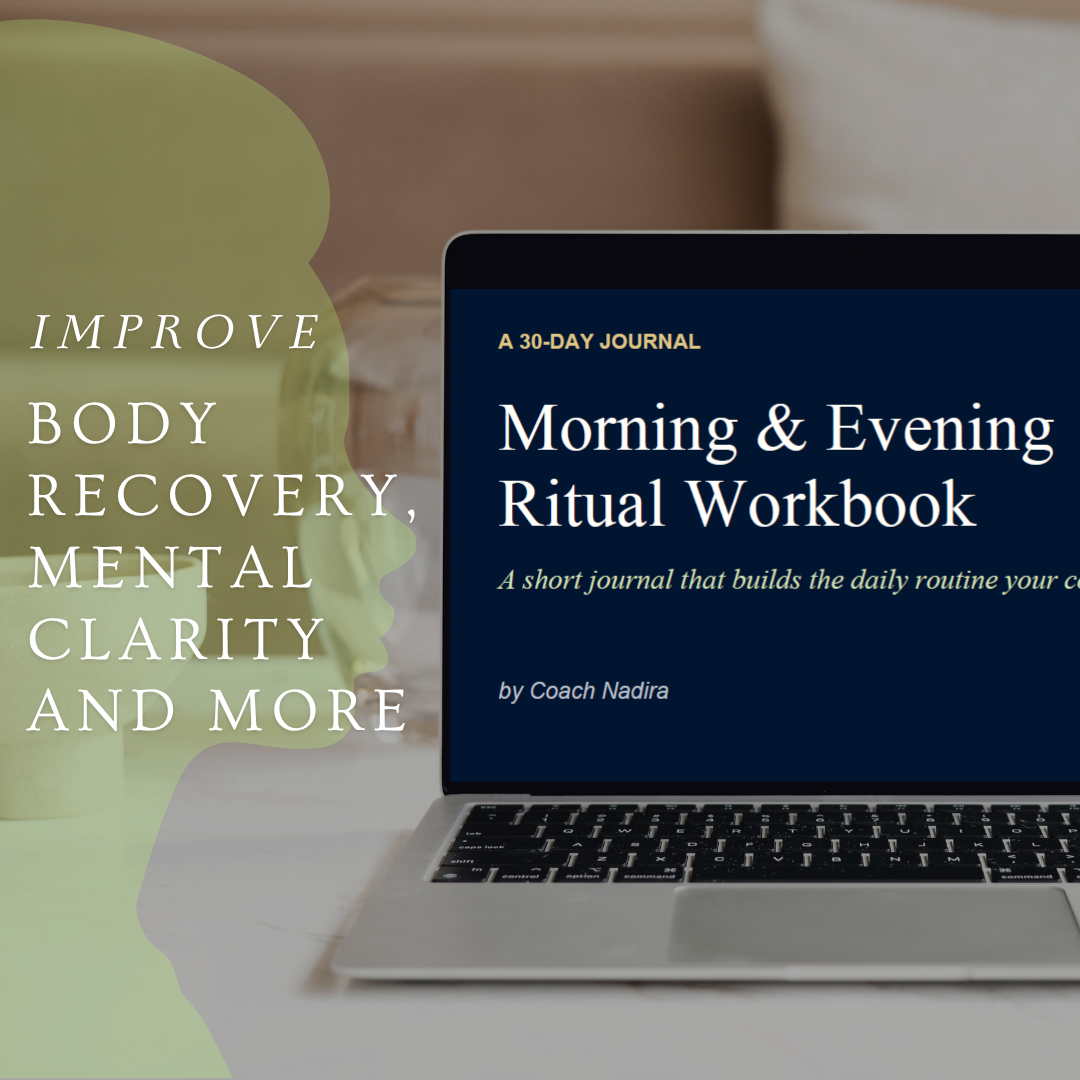
Morning & Evening Ritual Workbook — $19
Two minutes, twice a day — a short journal built around exactly the fresh-start research above, so you get two anchor points instead of waiting for January.
See the Ritual WorkbookThree ways to use your own fresh starts
- 1. Treat "this morning" as a real boundary. Yesterday's slip doesn't have to carry over — that's the psychological separation the research describes, and you can claim it on purpose.
- 2. Keep the evening ritual just as short as the morning one. Two minutes of reflection is enough to close the day deliberately, rather than just scrolling until you fall asleep.
- 3. Anchor it to something that already happens daily. Pairing a new ritual with brushing your teeth or making coffee borrows a landmark that's already built into your day.
"You don't need a new year. You need a new morning — and you get one of those every single day."
— Coach Nadira
Sources
- Dai, Milkman & Riis (2014), Management Science, "The Fresh Start Effect: Temporal Landmarks Motivate Aspirational Behavior" — the Google search, gym attendance, and goal-commitment studies
- National Sleep Foundation, consensus statement on sleep regularity — why consistent sleep and wake timing matters independent of duration
Frequently Asked Questions
What is the "fresh start effect"?
Do I need to wait for New Year's or Monday to start a new habit?
Does having a consistent bedtime and wake time actually matter?
Is the Morning & Evening Ritual Workbook a habit tracker?
Ready for two fresh starts a day?
$19 · two minutes, twice a day · a mirror, not a scoreboard.
See the Ritual Workbook